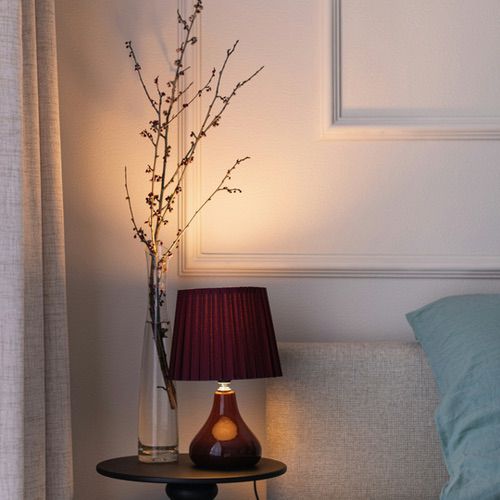
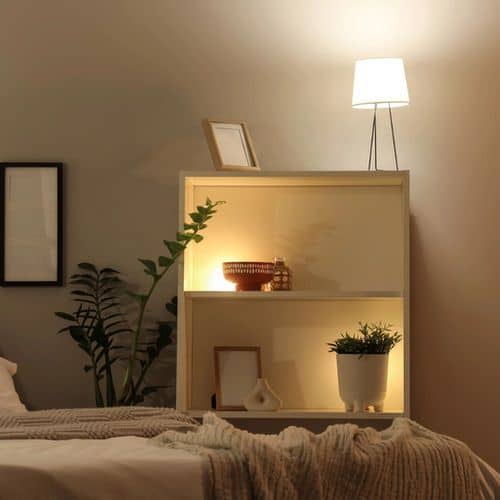
You can spend a whole evening getting the living room right, dimming lamps and lighting candles, then undo it all in about ninety seconds by brushing your teeth under a 4000K ceiling light at half past eleven. The bathroom is the last room you’re in before bed, and it’s usually the brightest, coldest-lit room in the house.
Disclosure: If you purchase anything from links in this post or any other, I may receive some kind of affiliate commission. However, I only ever mention products I love and would recommend whether I was being compensated or not. You can read my full disclaimer here.
The bathroom is also the one room where the standard advice doesn’t apply, because you can’t just add a lamp. Getting hygge bathroom lighting right means working around some real constraints, and this post covers what those are and what you can actually do within them. If you want to know why warm and low works in the first place, the full guide to hygge lighting explains it.
What you can and can’t install
If you’re in the UK, this is where people get caught out. Wiring regulations don’t allow standard 13A sockets in a room with a bath or shower. As electricians explain, a shaver socket is the only outlet permitted, and light switches must be outside the door or a ceiling pull-cord.
So the usual fix (buy a lamp, plug it in, add a dimmer) is off the table. Everything has to be battery-powered, rechargeable, wired in by an electrician, or simply be a candle.
If you are buying a fitting, look for an IP rating of 44 or higher. That number tells you it can cope with splashes and steam, and it’ll be printed on the box. Anything closer to the bath or shower needs a higher rating again, which is a conversation for whoever’s wiring it in rather than something you need to work out yourself.
Obviously, I am not an electrician. So if you’re uncertain about what you can and can’t add, definitely ask an electrician before you do anything.
Your mirror light is probably in the wrong place
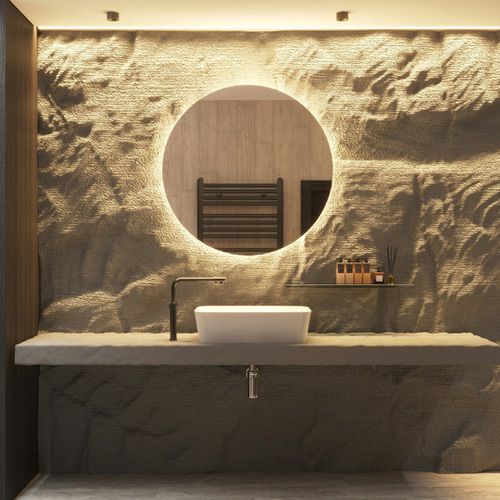
Most bathrooms light the mirror from directly above, which is exactly where you don’t want it. Light coming straight down gets blocked by your brow, nose, and chin, and casts shadows in the places you’re trying to see. That’s why you can have a bright bathroom and still look faintly unwell in it.
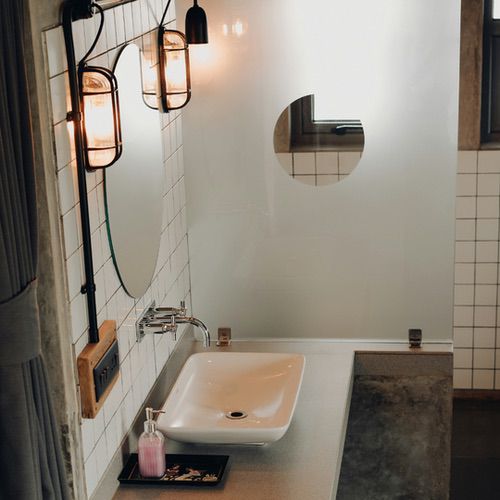
Light from both sides of the mirror at roughly face height fixes this. The American Lighting Association recommends mounting at 65 to 70 inches from the floor, as Houzz notes, which is about eye level for most people.
Lighting a mirror like this is typically a wiring job, so it’s better suited to someone already redoing a bathroom than a Tuesday evening fix. If your mirror light is fixed above the mirror, try a diffused fitting or a frosted bulb to soften the shadows. Or try stick-on rechargeable lights on either side of the mirror; they do a surprisingly decent job for very little money.
The one place I’d argue against warm-only light
The rest, my lighting posts will tell you to use 2700K everywhere. But, for the bathroom, I’d make an exception. For anything involving your face (shaving, contact lenses, makeup), you want something nearer 3500 to 4000K with a high colour rendering index, because warm light shifts how skin tones look and you end up doing your makeup for a room you’re not going to be in.
The honest answer is that a bathroom needs two settings. Accurate and bright in the morning, warm and low at night. If you’re replacing a fitting anyway, a tunable one gets you both. If not, work with what the ceiling gives you in the morning and add something warm and separate for the evening.
Good hygge bathroom lighting is about having that second setting at all, not ripping out the first one.
The three in the morning problem
This is the most useful thing in this post: A motion-sensor light near floor level, warm and dim, means you never flip the main light in the middle of the night.
Two minutes of bright overhead light at 3am wakes you up and makes it harder to fall back asleep, which is why bedroom lighting matters more than most people think. A rechargeable warm-white motion-sensor light sticks to the skirting or the side of the vanity, lasts weeks between charges, and gives you just enough to see by.
Stick it low and pointing at a wall rather than out into the room. Bounced light is softer than direct light, which is the same principle behind most cheap mood lighting fixes.
Candles can work for hygge bathroom lighting
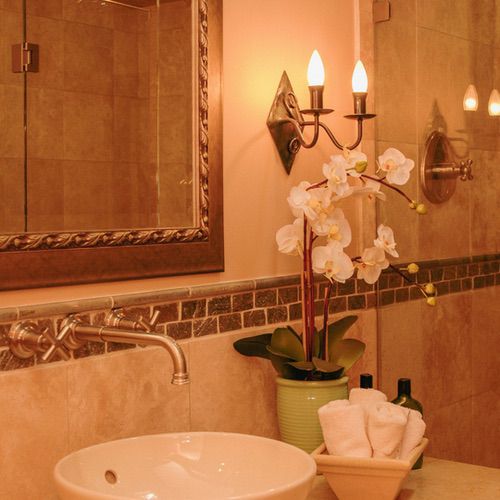
The bathroom is one of the few rooms where candles aren’t decorative; they’re doing the actual job. No socket needed, no wiring, and no confusing IP rating. Two or three on a windowsill or shelf give you enough light for a bath, but not enough to wake you up.
Steam and scent are a consideration. A heavily scented candle in a small humid room gets overwhelming fast, so unscented pillar candles are usually the better call if you’re lighting more than one.
What’s worth buying
- Rechargeable magnetic puck lights for either side of the mirror or under a shelf. No wiring, and the magnetic backs let you take them down to charge.
- A rechargeable motion sensor night light for the middle of the night.
- 2700K bulbs if your bathroom fitting takes a standard bulb and you’ve decided the evening matters more than the morning.
- Unscented pillar candles, which cost less than any of the above and do more.
The kitchen has the same underlying problem, incidentally: a room that needs proper task light and also needs to feel decent at night. The solutions there are different, mostly because you’re allowed sockets (especially in the UK).
Try one change tonight
Stick a warm motion light low down somewhere and stop using the main light after ten. That’s most of hygge bathroom lighting in one move, and it costs less than a takeaway.
Does your bathroom ruin your evening, or have you already solved it? Tell me what worked in the comments.
Disclosure: If you purchase anything from links in this post or any other, I may receive some kind of affiliate commission. However, I only ever mention products I love and would recommend whether I was being compensated or not. You can read my full disclaimer here.