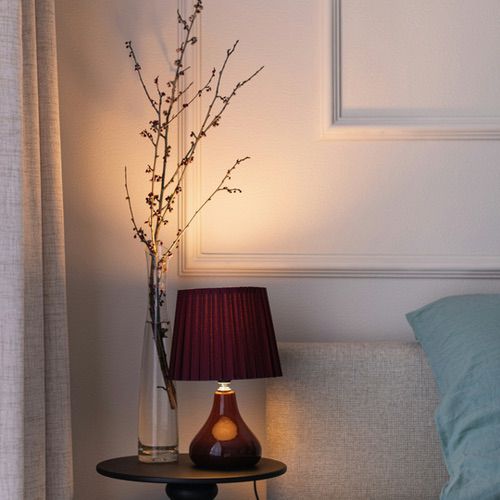
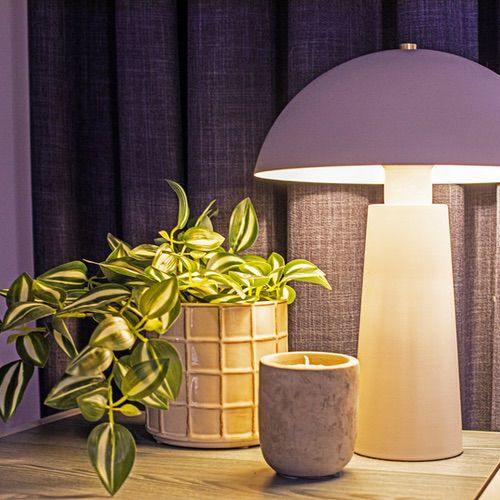
A bookcase is one of the best light sources in a house, and most people never use it as one. It offers a broad, mid-height vertical surface full of matte texture that absorbs and softens light rather than bouncing it back at you. Put a few small warm lights in there, and you’ve added a whole wall of low glow without adding a lamp.
Disclosure: If you purchase anything from links in this post or any other, I may receive some kind of affiliate commission. However, I only ever mention products I love and would recommend whether I was being compensated or not. You can read my full disclaimer here.
Lighting bookshelves is one of the cheapest changes you can make to a room, and this post covers four ways to do it, where the light needs to sit so you can still read the spines, and the mistakes that make a bookcase look like a shop display.
If you want the wider explanation of why low, warm, multiple sources work, the full guide to hygge lighting covers the reasoning behind all of it.
Four ways of lighting bookshelves
- Puck lights are small round lights that stick or screw to the underside of a shelf and throw a pool of light onto whatever’s below. Battery-powered or rechargeable versions need no wiring, which makes them the obvious choice if you’re renting or if the bookcase is nowhere near a socket. The catch is that most rechargeable pucks run 3000K at their warmest, which is fine but not as warm as you’d ideally want.
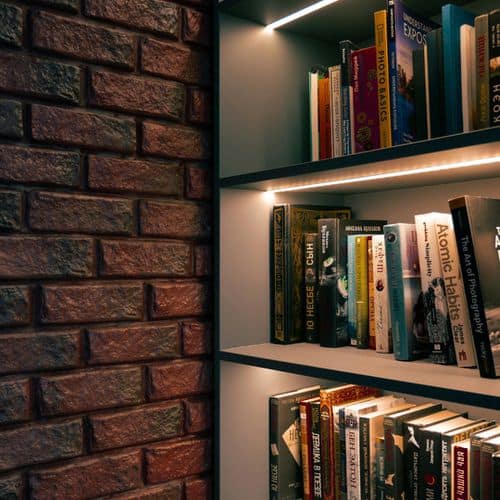
- Adhesive LED strip runs along the front lip of each shelf and gives you an even wash rather than pools of light. It’s the neatest result and the cheapest per shelf, though it needs a power source and a bit more planning.
- A picture light or clip-on light sits above the whole unit and washes downwards. Least faff, least control, but it only works on a bookcase shorter than you are.
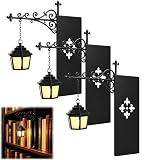
- Cute Lantern Nook Lights – These mini library nook lanterns slide discreetly between books using their hidden metal plate to create the illusion of a vintage lantern floating on your shelf.
Whichever you pick, choose a dimmable option. A bookcase at full brightness stops being atmosphere and starts being a display cabinet.

Put the light above the spines
This detail separates a bookcase that looks good from one that just looks lit. Shelfology’s guide to shelf lighting puts it simply: position the light above the spines so you can read the titles.
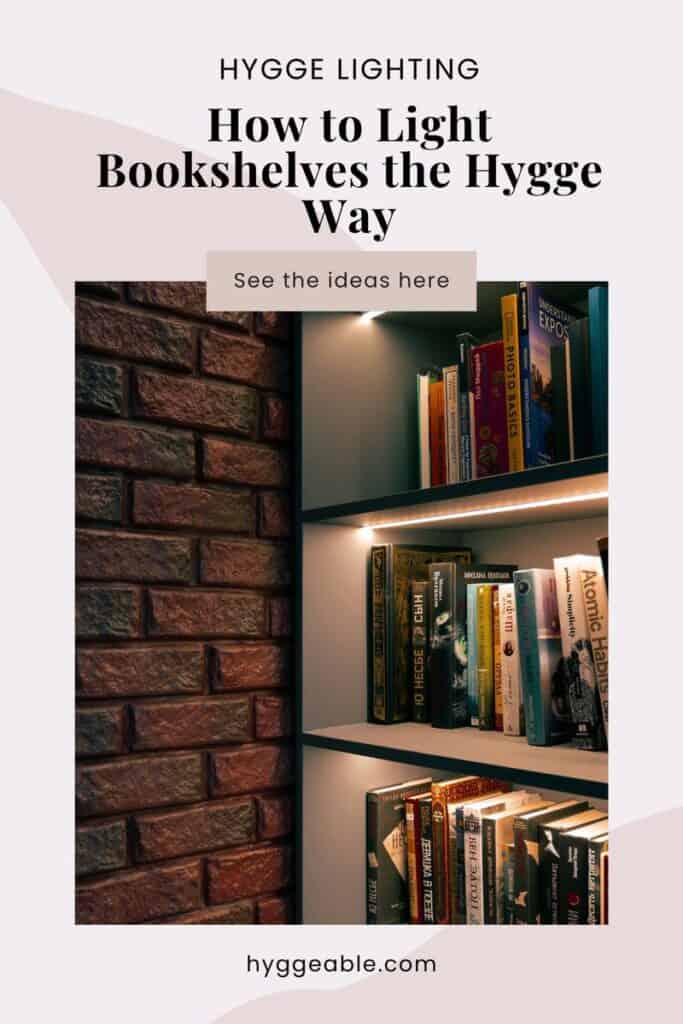
The common mistake is mounting the light too far back, which lights the rear panel and leaves the books in shadow. You end up with a glowing box and a row of dark shapes in front of it. Place the puck or strip toward the front edge of the shelf above, pointing down onto the tops of the spines.
If you’re using strip, tuck it behind the shelf’s front lip. Seeing the individual diodes is what makes a shelf look like a gaming setup, and hiding the strip behind an edge is the difference. Tape the strip in place loosely and check the effect before you peel the adhesive backing, because that glue only sticks properly once.
Only light every other shelf
Here’s the change that makes the biggest difference, and it saves you money: don’t light every shelf.
A bookcase lit on every level is uniform and flat. Light alternate shelves for lit rows and shadowed rows, and the eye reads that variation as warmth rather than illumination. It’s the same principle as three small lamps instead of one bright ceiling fitting, covered in the guide to getting cosy mood lighting right without buying much.
Do two or three shelves at eye level and see how it looks before going further.
Watch the dark spines and the glossy covers
Dark spines swallow light, so a shelf of black and navy hardbacks needs noticeably more than a shelf of cream paperbacks. Glossy covers and art books do the opposite, bouncing it back at you as glare.
To fix this, angle the light slightly forward for dark books, and move the glossy things to a shelf you haven’t lit. Lighting bookshelves well mostly comes down to what’s actually on them, which is why copying a photo rarely works.
While we’re here: light does damage to books
The Library of Congress notes that fading, yellowing, and embrittlement from light exposure generally can’t be undone by conservation, and spines take the worst of it because they face outward.
Sunlight is the biggest culprit, so a bookcase opposite a south-facing window does more damage than any strip light will. Preservationists say LED and incandescent make little practical difference for books. The advice that matters is to keep them dim and switch them off when you’re not in the room.
What to buy
- Rechargeable magnetic puck lights with a remote and dimmer for the no-wiring version. Magnetic backs mean you can reposition them when you rearrange the shelves.
- WOBANE 2700K plug-in puck lights if you can reach a socket and want proper warm white rather than the 3000K most battery units give you.
- PAUTIX 2700K dotless COB strip for the neat option. COB strip gives a continuous line of light instead of visible dots, which matters when the strip sits at eye level.
- Lantern Nook Lights if you’re inspired by vintage library lanterns and old-world lighting.
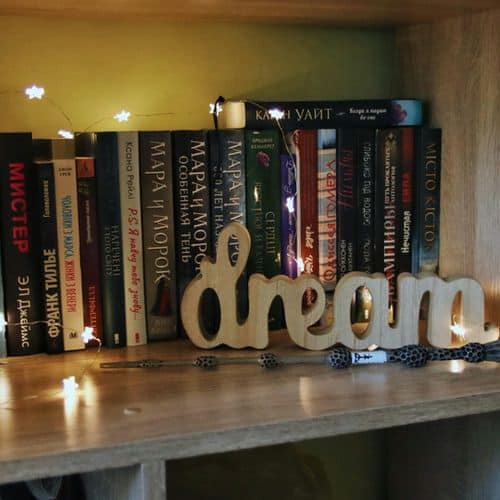
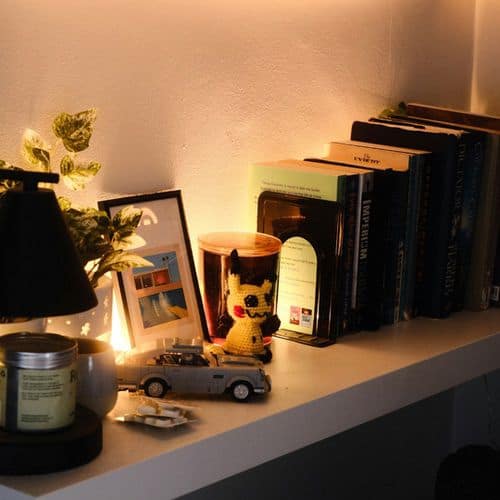
Fairy lights are a cheap alternative, and they work well threaded along the back of a shelf, though they light the space rather than the books. There are several ways to use them around a bookcase and elsewhere if you want to try the idea before buying anything fitted.
Start with two shelves
Lighting bookshelves doesn’t need to be a project. Pick the two shelves nearest eye level, stick a puck light under each, and turn off the ceiling light to see what you’ve got. If the room already has a lamp or two working properly, a lit bookcase becomes a third source and the whole space shifts, which is the principle behind most good living room lighting.
Have you got a bookcase you’ve been meaning to light? Tell me what’s on it, and I’ll suggest where to start.
Disclosure: If you purchase anything from links in this post or any other, I may receive some kind of affiliate commission. However, I only ever mention products I love and would recommend whether I was being compensated or not. You can read my full disclaimer here.